A Beginner's Guide to Bird Watching at Cubbon Park
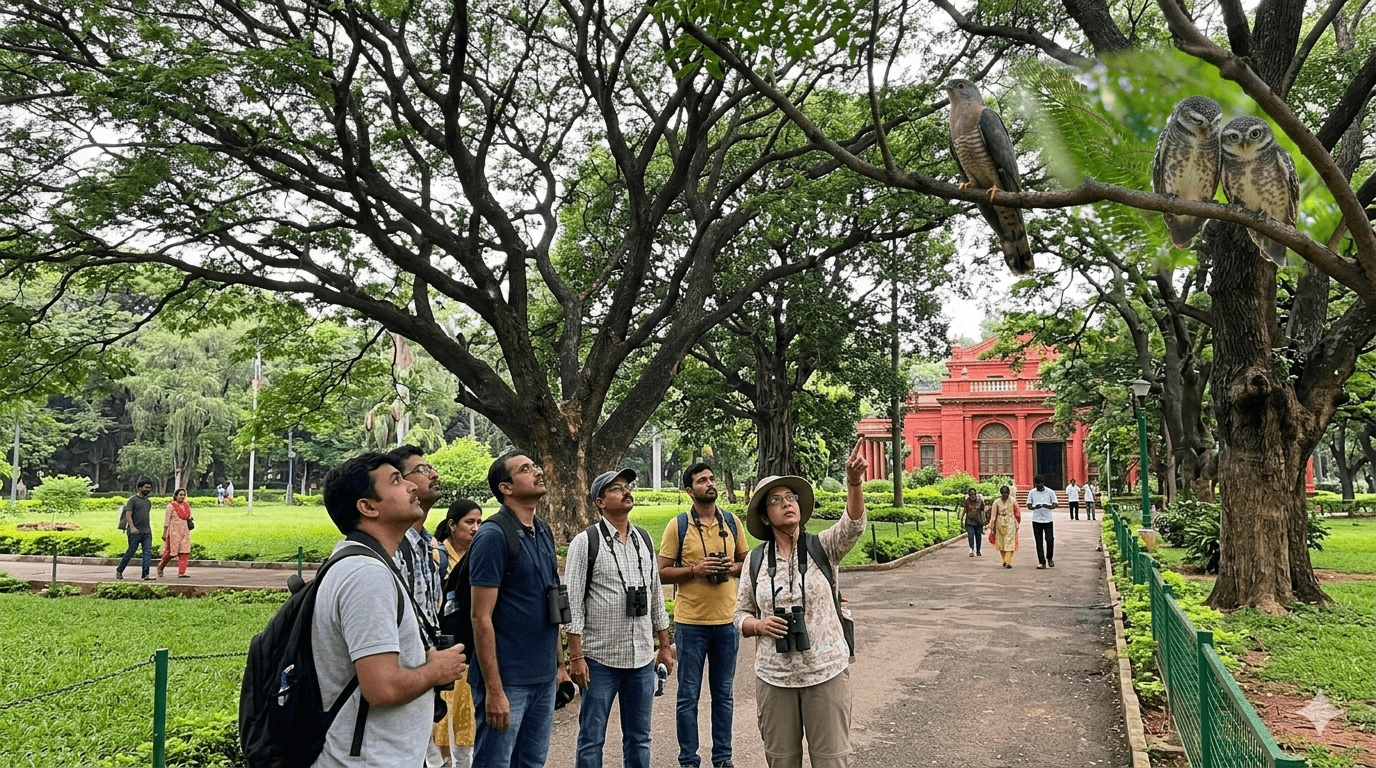
You don't need to drive to the outskirts of Bengaluru to see birds. Cubbon Park, right in the centre of the city, is home to over 60 species — and it's one of the most accessible bird watching spots in India.
What You'll See
Cubbon Park's mix of old-growth trees, flowering plants, and water features attracts a surprising variety of birds.
Common Residents (year-round)
Seasonal Visitors
Around Water
Best Spots
The Bamboo Grove — Dense cover attracts smaller birds. Flycatchers, sunbirds, and warblers are often spotted here. The quietness helps — fewer walkers come this way.
The Lotus Pond Area — Water birds congregate here. Early morning is best when the pond is still and the light is soft.
The Large Fig Trees — When the fig trees are fruiting (typically monsoon season), they become magnets for barbets, hornbills, and parakeets. Find a fig tree with ripe fruit and wait.
The Central Lawn Edges — Indian Robins, Mynas, and Treepies forage along the edges where lawn meets tree cover.
What to Bring
Best Times
Join a Group
Bird watching is better with experienced eyes. Several groups in Bengaluru run walks at Cubbon Park. Check the events page on Cubbon Park Life for upcoming bird watching meetups. Experienced birders can help you identify species and show you the best spots.
Citizen Science
If you're interested in contributing to bird conservation, log your sightings on eBird (ebird.org). Cubbon Park is a well-documented hotspot on the platform. Your observations help researchers track bird populations over time.
Want to join activities at Cubbon Park?
Browse Upcoming Events